A dentist performs somewhere between 15 and 20 procedures on a typical day. After each one, they sit down and write a report. Clinical notes for the practice, a summary for the patient, sometimes a referral letter to a specialist. That documentation takes 10 to 15 minutes per procedure. Add it all up and you are looking at 2 to 3 hours of pure paperwork every single day.
That is not an exaggeration. Ask any dentist what they do between 5pm and 7pm, and most of them will tell you the same thing: catching up on reports.
The same problem shows up across healthcare. General practitioners, physiotherapists, specialists, veterinarians. The clinical work takes 20 minutes. The documentation that follows takes another 15. And the later it gets in the day, the more likely those reports are rushed, inconsistent, or put off until tomorrow.
The Real Cost Of Writing Everything By Hand
When you frame documentation as “just part of the job,” it is easy to overlook what it actually costs.
Every hour a dentist spends writing reports is an hour not spent seeing patients. For a busy practice, that can mean 3 to 4 fewer appointments per day. At an average of €80 to €150 per visit, the revenue impact adds up quickly.
Then there is the staff side. Admin teams spend hours transcribing handwritten notes, chasing doctors for missing details in documents, or reformatting reports to meet compliance standards. That is time and salary spent on work that adds no clinical value.
Compliance makes everything harder. Reports need to follow specific formats, include the right disclaimers, use correct clinical terminology, and meet documentation standards that vary by specialty and jurisdiction. A report written at 6:30pm after a long day is exactly where mistakes happen. In healthcare, documentation errors carry real consequences, for the patient and for the practice.
And there is a cost that rarely shows up on a spreadsheet: burnout. Studies consistently show that administrative burden is one of the top reasons healthcare professionals feel exhausted and dissatisfied with their work. People who trained for years to help patients end up spending their evenings typing.
What Changes When You Can Just Talk
The concept behind TekamoAI’s medical and dental reporting system is straightforward. What if, after every procedure, the dentist could simply say what happened and let the system handle the rest?
Here is how it works in practice:
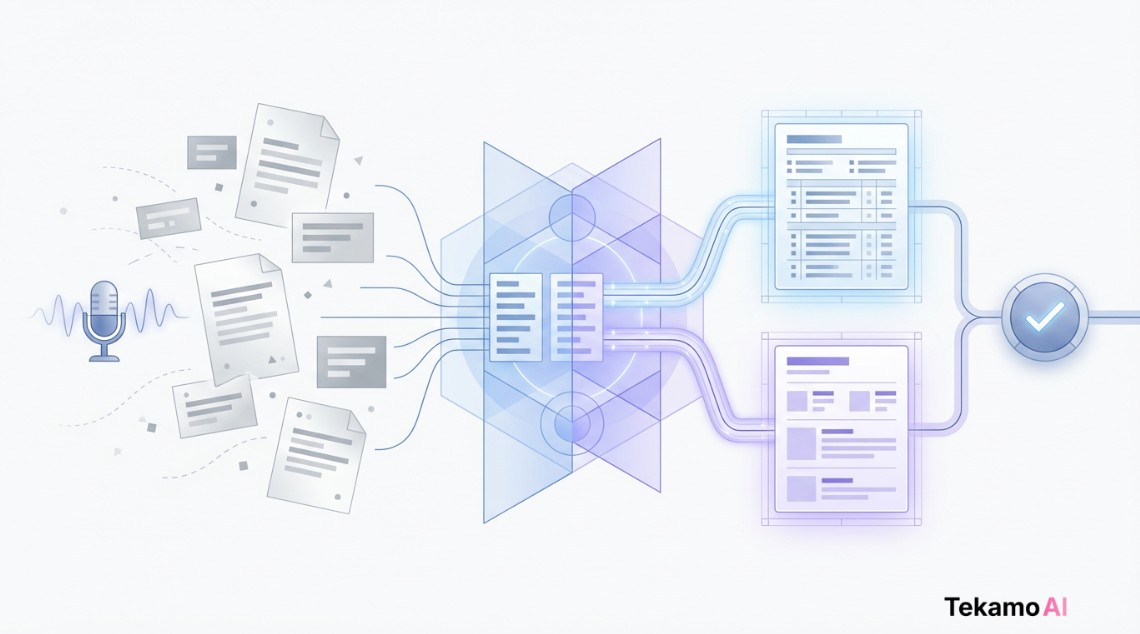
The dentist finishes a procedure, picks up their phone, and dictates their findings. Plain language, clinical shorthand, observations about the patient’s condition, whatever comes naturally. The whole thing takes 60 to 90 seconds.
TekamoAI processes that dictation along with any supporting inputs like clinical images, existing patient notes, or lab results. From that raw material, the system generates two separate documents.
The first is a detailed internal clinical report. This goes into the practice’s records. It follows the clinic’s own structure, uses consistent terminology, and includes all the clinical detail needed for continuity of care.
The second is a patient-facing summary. This is written in clear, accessible language that the patient can actually understand. It includes what was done, any findings, recommended next steps, follow-up instructions, and all required disclaimers. Formatted and ready to send.
Both documents follow the practice’s own templates and formatting standards. Every report, from every practitioner, every day, comes out looking and reading the same way.
The Human Stays In Control
One of the first questions any healthcare professional asks is: “Does the report go out automatically?”
The answer is no. Every patient-facing document goes through a human review before it reaches anyone. An admin team member opens the draft, checks the content, makes any adjustments if needed, and approves it for delivery.
The AI handles the time-consuming part: turning unstructured dictation into a well-organized, properly formatted report. A person handles the part that requires judgment: making sure everything looks right before the patient sees it.
This changes the admin team’s job in a meaningful way. They go from building reports from scratch, often working from messy handwritten notes or fragmented recordings, to reviewing polished drafts that are already 90% complete. The workload drops. The quality goes up. Everyone does the part of their job that actually requires their expertise.
Consistency That Manual Reporting Can Never Match
Every practice with more than one practitioner knows this problem.
Dr. A writes detailed, structured reports.
Dr. B writes brief notes that barely cover the basics.
Dr. C has excellent clinical skills but writes reports that admin staff struggle to decipher.
When reports are generated from a standardized system, that variability disappears. The inputs can be different, because every practitioner dictates in their own style. But the outputs are consistent, because the system applies the same structure, terminology, and formatting every time.
For practices that deal with audits, insurance documentation, or regulatory reviews, this consistency is worth its weight in gold. Every report meets the same standard. Every document is traceable. There is never a question about whether proper protocols were followed in documentation.
Beyond Dental: The Same Approach Works Everywhere
While the dental use case makes the workflow easy to visualize, the same system applies to any healthcare setting where professionals document patient interactions.
General practitioners who write consultation notes and referral letters after every appointment see the same time savings. Specialists generating detailed findings reports can dictate complex observations and receive structured documents that follow their specific templates. Physiotherapists tracking treatment progress across multiple sessions get consistent documentation without spending half their evening typing updates. Veterinary clinics use the same workflow for procedure documentation and owner-facing summaries.
The clinical context is different, but the reporting problem is identical: a skilled professional spending too much time on paperwork instead of practicing.
Any setting where someone finishes a consultation, procedure, or assessment and then sits down to write about it is a setting where this system delivers immediate value.
Compliance Built In From The Start
In healthcare, documentation is never just about record-keeping. It is about legal protection, regulatory compliance, and continuity of care.
TekamoAI generates compliance-ready documentation by default. Every report follows consistent formatting and clinical standards. Required disclaimers, follow-up protocols, and standard language are included automatically based on the type of procedure and the practice’s configuration.
Every generated document carries a full audit trail. The practice always knows which input produced which report, when it was created, who reviewed it, and when it was sent to the patient.
All patient data is encrypted at every stage of processing. Data is never shared with third parties and never used to train AI models. Processing is fully GDPR compliant, which matters particularly for practices operating across European jurisdictions where data protection requirements are strict and actively enforced.
The Numbers Behind The Change
Practices using AI-assisted reporting typically see a 60 to 75% reduction in time spent on documentation. For a dentist performing 15 procedures a day, that translates to roughly 2 hours freed up.
Two hours might not sound dramatic on paper. In practice, it means 3 to 4 additional patients per day. Or it means leaving the office at a reasonable hour. For most practitioners, both of those outcomes change the quality of their working life significantly.
Admin teams see a proportional reduction in workload. Reviewing and approving a well-structured draft takes a fraction of the time compared to building a report from raw notes. Practices report that admin staff can handle higher patient volumes without additional hiring.
Documentation quality becomes consistent across the entire practice. New practitioners produce reports at the same standard as veterans. Locum doctors generate documentation that matches the practice’s format from day one. The output no longer depends on who wrote it or how tired they were when they wrote it.
Getting Started Without Disrupting Your Practice
The setup process is designed to work around a running practice, not interrupt it.
You share your current report templates, define any specific formatting requirements or compliance standards, and TekamoAI configures the system around your actual workflow. The first reports can be generated within days.
Nothing about your daily operations changes. Patients are seen the same way. Clinical procedures happen the same way. The only difference is what happens after: instead of sitting down to type for 15 minutes, the practitioner talks for 90 seconds and moves on to the next patient.
The Shift From Documenting To Practicing
Medical and dental professionals did not spend years in training to become typists. Yet for most of them, documentation takes up a quarter of their working day or more.
Removing that burden raises the standard of documentation because every report is generated from structured inputs, follows consistent templates, and passes through human review before reaching a patient. The practice gets better records. Patients get clearer communication. And the people who do the clinical work get to spend their time on clinical work.
If your practice spends more time on reports than you would like, we would be happy to show you how this works.

Book a Demo
See how TekamoAI automates workflows, enhances decision-making, and adapts to your business processes.
Our team will walk you through how TekamoAI integrates with your existing systems, identifies automation opportunities, and delivers secure AI agents tailored to your operations. Tell us a bit about your organization and we’ll prepare a personalized demo that matches your goals and challenges.