Have you ever opened a new job requisition and felt the weight of starting from zero again?
Most HR teams know the routine. A new role opens, and the cycle begins: writing job descriptions, posting across platforms, reviewing long lists of applicants, and repeating early-stage screens that look almost identical to the ones from a few months earlier. Meanwhile, your ATS holds years’ worth of candidates who once made it through screening, joined interviews, or reached the final stages before another person was selected.
Many of these applicants were strong but applied at the wrong moment. Some were close
finalists. Others have since expanded their experience. Together, they represent the time your
team already invested, yet they rarely get re-reviewed because searching through old profiles is
slow and difficult. That’s the problem we want to address.
Let’s dive in.
Most strong candidates don’t disappear - they get buried inside the ATS
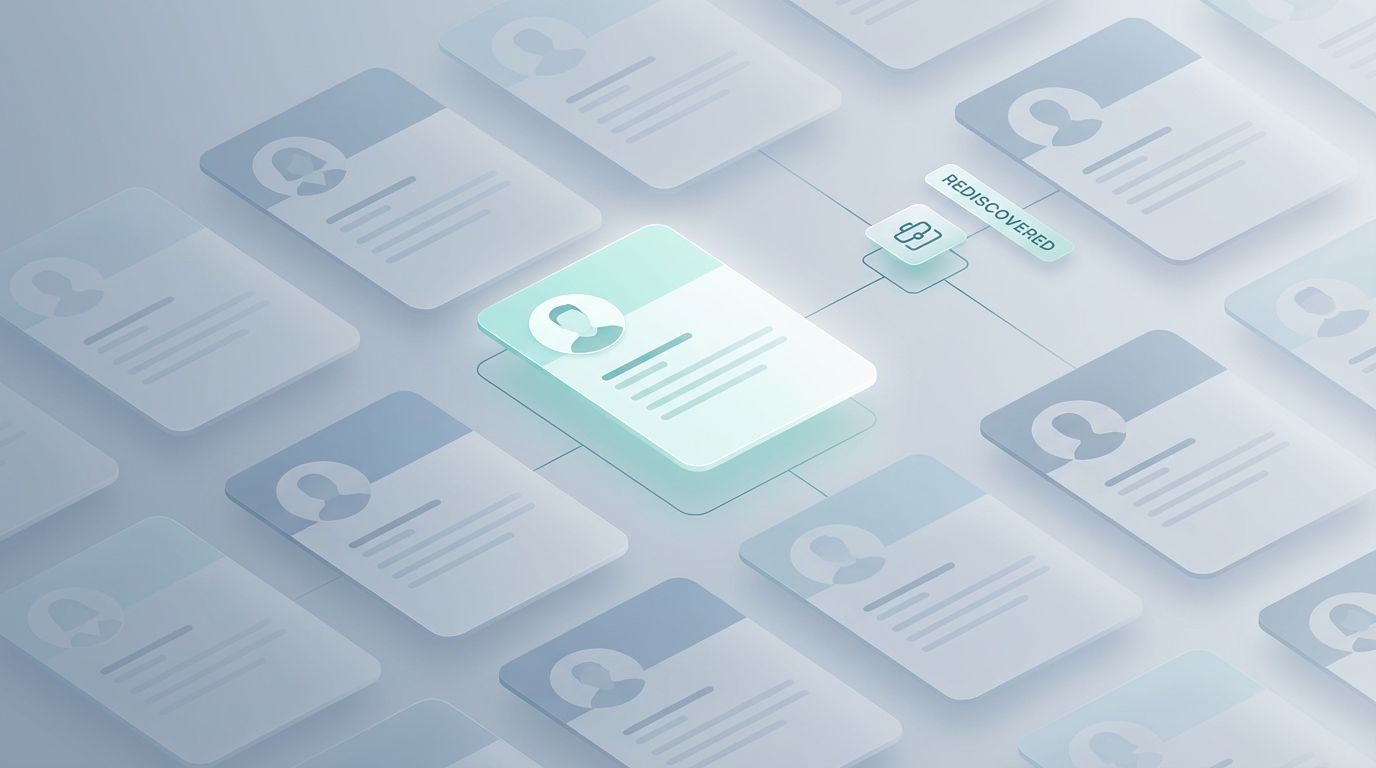
Every hiring cycle produces a group of near-matches who simply weren’t selected. They passed initial evaluations and showed interest, but their profiles faded into older records as new requisitions took priority. Large ATS databases make it difficult to locate these people quickly. When deadlines are tight, teams naturally turn to external sourcing even when strong talent already exists internally. AI tools help by scanning all historical profiles and ranking them against new job criteria. Instead of beginning with untested applicants, the system surfaces people who already demonstrated alignment with your standards. This reduces the time spent sourcing and recovers high-potential candidates who would otherwise stay hidden.
AI connects past applicants to current roles with precise matching
Rediscovery works by reading resumes, screening notes, skills, education, and prior interview outcomes, then comparing them with the requirements of a new role. As soon as a requisition is created, the system identifies profiles that fit.
This becomes especially useful when:
- A strong candidate narrowly missed an offer in a previous cycle.
- A new role shares similarities with a previous opening.
- A past applicant has updated their experience or earned new certifications.
- Notes highlight strengths that still matter for today’s needs.
Your team starts with candidates who are already familiar with your company and have a documented track record. It’s a direct path to a higher-quality shortlist.
Rediscovery turns previous hiring work into new opportunities
Every screening call, interview, and evaluation reflects hours already spent. When those candidates sit untouched, the effort is lost.
Candidate rediscovery puts that time to work again.
Teams can move faster because a portion of the assessment has already been completed. For example, applicants who passed cultural fit screens earlier can bypass early interviews, and those with previously verified technical skills can enter later stages immediately. Silver medalists can be contacted with personalized messages based on their earlier conversations. Former interns or contractors can be considered for full-time roles.
This approach strengthens candidate relationships and increases the return on your team’s past efforts.
Your pipeline stays active even when hiring slows down
During quiet periods, pipelines often stagnate. By the time hiring restarts, HR teams must rebuild everything from the ground up.
With rediscovery, the pipeline remains in motion. AI monitors changes in archived applicants’ public profiles and flags updated certifications, added responsibilities, or new skills. When hiring picks up again, your team sees who has grown into a stronger match.
This creates continuity and reduces the heavy lift that normally comes with restarting the hiring engine.
AI rescoring gives candidates a fair second review
Role expectations shift, teams evolve, and candidates gain new experience. But without a structured process, older evaluations remain unchanged.
AI rescoring helps realign past applicants with current requirements. It adjusts for updated job criteria, new skill relevance, team priorities, and the natural variation that happens when different interviewers assess candidates. Someone labeled “junior” two hiring cycles ago may now be a strong contender.
Rediscovery gives these applicants a second review based on today’s standards, which can improve both fairness and accuracy in the selection process.
Hiring speeds up without reducing quality
Teams often assume speed requires compromise, yet rediscovery moves faster because the groundwork was already done.
Hiring improves because:
- Shortlists form faster.
- External sourcing becomes less necessary.
- Candidates feel valued when contacted again.
- Interview timelines shorten.
- Offer acceptance tends to increase when applicants already know the company.
HR teams gain time back in their week, and hiring managers see stronger finalists sooner.
Your strongest future hires may already be in your ATS
Recruitment pipelines develop over years. Every cycle adds more talent, even if they weren’t selected at the time. Many of those applicants didn’t decline the opportunity; they were simply outpaced by someone else or applied at a different stage of their career.
Rediscovery reintroduces them. When they return, they often bring additional experience, clearer direction, and stronger alignment with the role.
This shifts the ATS from a passive archive to an active source of qualified talent.
Your next great hire may already be waiting there.
Ready to revive your talent pipeline?
Teams that want to modernize their process often see the biggest results when rediscovery becomes part of their workflow.
Our team helps mid-sized companies install AI systems that scan ATS data, surface top matches, and rebuild pipelines in a matter of days. If you’re exploring how rediscovery could work inside your organization, contact us and we will walk you through the options and outline a practical path for implementation.